


I got eaten alive this weekend.
No-see-ums, mosquitoes, the whole outdoor buffet. By Sunday, I counted 38 bites on one leg alone.
Let’s be clear that breathing alone will not make the itching stop. I’m not going to pretend a breathing pattern out-competes histamine. If a bite is doing its thing, it’s doing its thing.
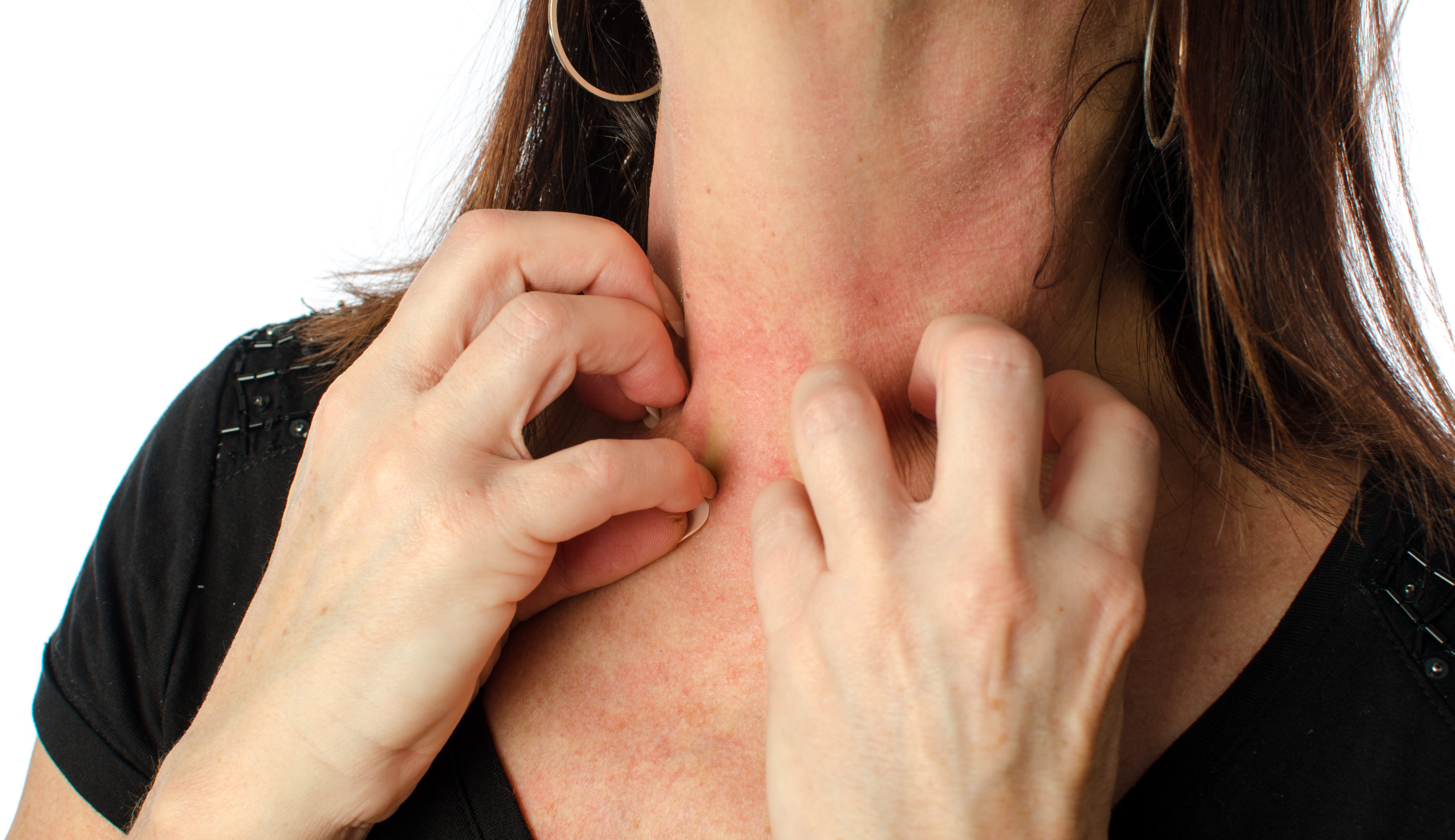
It isn’t just the itch, though; it’s everything that piles on top of it. The fixating on the redness and the bumps, the scratching that makes it worse, the mounting irritation that turns a bunch (okay, dozens) of bug bites into an event you’ll always remember, and not in a good way.
The Itch is Just the Fuse
There’s a well-documented loop dermatologists call the itch-scratch cycle. Scratching triggers the release of more histamine, which intensifies the itch, which increases the urge to scratch. So you do, setting off a cycle that gets worse the more you engage it.
The itch stays local, but the impact doesn’t. Once you’re fixated on those six bites clustered behind your knee, you’re primed: irritable, short-fused, one bad text away from snapping at someone who had nothing to do with any of it. (And when I say “you,” I might mean “me”.)
Your body doesn’t file irritation by source. An unresolved, low-grade physical annoyance reads to your nervous system the same way an unresolved argument or an overflowing inbox does. The message? Something’s unfinished, stay alert.
That’s why a handful of hungry gnats can leave you as genuinely wrecked as a stressful day at work. The bites don’t cause it. The hours of low-grade bracing do.
This the part breath can do something about.
A Breath to Let the Charge Out
A lot of breathwork coaches would give you a soothing technique for this, but I’m giving you one that gets the lead out. This sniff-based breath is an energizing technique with a little force behind it.
Think of this as the equivalent of a hard sigh, an audible “ARGHHH”, or the way animals shake off something that just happened. You’re not suppressing the reaction. You’re giving the reactive charge somewhere to go besides your fingernails.
Do it by taking four quick, sharp inhales through your nose, stacked on top of each other without exhaling in between. Then take one longer exhale through your mouth, about two seconds, nice and relaxed.
That’s one breath. Try 5-6 and take a break. If you like it, do another set. If you keep going, you may start to feel a little buzzy and alert. That’s the whole “energizing” part showing up, so you’ll want to avoid this one at bedtime. (Also avoid it if you have any cardiac issues or are pregnant.)
Try it the moment you catch yourself fixating on a bite… or generally irritated and about to take it out on something unrelated. You’ll still be itchy afterward. But you won’t be the person who was short with the barista because a mosquito hijacked your weekend.
Last Gasp
“Pain is inevitable. Suffering is optional.” — Haruki Murakami
There are a few things besides your breathing that can help with bug bites.
I like Sarna Anti-Itch Lotion and Benadryl Itch-Stopping Gel. You can also take Benadryl orally – but it makes some people drowsy, so Claritin is a good over-the-counter alternative for day.
Here’s something I do sometimes which I probably shouldn’t… and you, dear reader, really probably shouldn’t, but I’m going to tell you anyway.
For a huge bite that welts up, I’ll dig an X into it with my fingernail. Not enough to break the skin, just to leave a dent for a few minutes. As a kid I remember hearing it would help, and because it did in that one instance, the placebo effect has stayed strong.
I also try to remind myself that what’s bothering me are just these teeny, tiny nerve endings that are smaller than a grain of sand. The tough love helps!
If you liked this article, there’s lots more in my free weekly newsletter, The Full Exhale. Get it here →
The shake-off is the real key here, and I think you buried it.
Watch a dog after something startles it. The moment passes, the dog shakes, and the whole event leaves the body in about two seconds. Nothing is stored.
No dog is short with the barista three hours later. Every mammal does this. We're the only ones who kept the alarm and dropped the discharge.
That's why your four sharp sniffs work. It isn't a technique. It's the shake, in a form you can do in an office.
Also, 38 bites on one leg is not a weekend. That's an ambush... :-)